


Digital Health Founders is a Santis Health series featuring one-on-one conversations with leaders from across Canada’s digital health ecosystem. From transformative startups to public sector changemakers, these episodes explore how innovators are shaping the future of care through collaboration, technology and bold thinking.
In this episode, we sit down with Mike Wessinger, co-founder of PointClickCare, North America’s leading software provider for the long-term care, post-acute care, and senior care industries.
Mike shares the genesis story of PointClickCare and how he and his brother pioneered the SaaS model in health care before the cloud was even a recognized concept. Drawing on his experience, Mike discusses the early days of shifting financial risk from users to vendors, the complexities of scaling a Canadian tech company across 50 distinct U.S. markets, and why he believes the integration of AI will strip away administrative burdens to allow true human-centric care in the future.
—
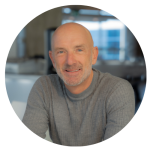 Mike Wessinger, Co-Founder and Executive Chair, PointClickCare
Mike Wessinger is PointClickCare’s Co-Founder and Executive Chair of the board. Prior to taking on the role of Executive Chair, Mike served as PointClickCare’s Chief Executive Officer from 1995 to 2021.
Mike’s vision and leadership established PointClickCare as the first cloud-based health information system for the senior care industry. Relentless in his pursuit to disrupt the health care status quo, Mike’s forward-thinking vision drove the organization to level silos across the health care ecosystem, creating North America’s largest care collaboration network.
In his role as Executive Chair, Mike continues to champion corporate culture, enhance governance, recruit diverse talent, and partner with internal and external boards and teams to solve critical health care challenges and propel PointClickCare forward as a world-class organization.
Outside of PointClickCare, Mike is also Co-Chair of the C100 board of directors, where he actively leverages his years of experience to coach and mentor leaders at the helm of rapidly scaling tech companies.
Episode Transcript
The full conversation, lightly edited for readability. Open a section to read it.
Introduction: Meet Mike Wessinger
Announcer You’re listening to From the Burgundy Chairs, a podcast for health system leaders created by Santis Health.
Ben King Hi everyone. My name is Ben King and I’m the digital health practice lead here at Santis Health. Welcome back to another episode of our digital health founder series. This podcast series is all about connecting with the trailblazers and visionaries driving Canada’s digital health space forward. We’re unpacking how these leaders are redefining health care through vision, technology and bold new ideas.
For today’s episode, I’m joined by Mike Wessinger, the co-founder of PointClickCare, North America’s leading software provider for the long-term care, post-acute care and senior care industries, and one of Canada’s greatest technology success stories. Mike is currently the executive chair of the board at PointClickCare. Prior to this role, he served as the organization’s chief executive officer from 1995 to 2021. His vision and leadership established PointClickCare as the first cloud-based health information system for the senior care industry. In his pursuit to disrupt health care in Canada, Mike’s forward-thinking vision drove the organization to level silos across the health care ecosystem, creating North America’s largest care collaboration network.
In his current role as executive chair, Mike continues to champion corporate culture, enhance governance and recruit diverse talent. He actively partners with internal and external boards and teams to solve critical health care challenges and propel PointClickCare forward as a world-class organization. Outside of PointClickCare, Mike is also co-chair of the C100 Board of Directors, where he leverages his experience to mentor leaders at the helm of rapidly scaling tech companies. Mike, thanks for joining me.
Mike Wessinger Great to be here.
Should You Start a Company With Your Sibling?
Ben King Before we get into the details of your story, which I very much want to hear, I want to note that you actually co-founded PointClickCare with your brother Dave. My question for you is, if someone came to you today and said, should I start a company with my sibling, what would you say?
Mike Wessinger It’s not an easy question. That really depends on the sibling. I have two other brothers, and I’m not sure we would have worked together the same way. I think the thing that worked for us is that the Venn diagram, the intersection of things we were passionate about and good at, there was very little overlap. So I would do it all over again, and if somebody else had that same sort of overlap — somebody you could trust completely, and was very good at and passionate about something that was slightly different than you were passionate and good at — I think that’s a pretty good combination.
Where the Idea for PointClickCare Came From
Ben King Excellent. So I want to dive into the story and sort of what you and your brother did. The foundational question I want to ask is how did you start PointClickCare — where did the idea come from, and why did you focus on this particular niche?
Mike Wessinger A lot of people get told this advice all the time: hey, do the thing you’re passionate about. And I kind of think, do the thing you’re good at, and then you’ll develop passion over time. It wasn’t that I in university had a particular passion for skilled nursing facilities and long-term care, but my mother was in the business. As a CPA, she worked for a chain of nursing homes, would put some basic tech in those homes, and understood the business well. All of my brothers and I at some point wound up, through connections of hers, working in and around that space.
So I started off in a sales position, started to get a real passion for the challenges that the industry was dealing with, and it didn’t take long after that to say, hey look, it’s time for us to build a company and maybe try and solve the problem in a different way. And that was really the genesis of PointClickCare. So I can blame my mother for it.
Ben King It’s always good to blame your mother for these things. Did you have a background in computer science, or where did the “bring tech to the setting” idea come from?
Mike Wessinger Interesting. Three brothers of mine are all software engineers. We all went to Western; I went the commerce route, they all went software engineering. So when we started the company, I was really the go-to-market, forward sales function, and my brother was more the operational and software development function.
Ben King And did you have a particular problem you were trying to solve? Was it just modernize this sector, or was there a particular thing where you said, these places are terrible at doing this thing, we want to solve that problem for them? How did you develop the first kernel of your product?
Mike Wessinger We got to experience the challenge firsthand. My brother, after he finished school, had gone and become a manager of IT for a small chain of nursing homes in Toronto, and saw firsthand how the technology being implemented there was really challenging. It was old, difficult to use. And I was selling software to the same industry, long-term care, skilled nursing facilities. I saw that this technology you had to buy, install and maintain — complicated software for electronic medical records and medical billing and everything you need to run the business — was just too complicated.
So my brother and I had been working together for a while, often putting the first technology these homes had ever had in place, and then watching them really struggle with it. And then we watched and asked, why is it so difficult for them to do this stuff? Well, first of all the technology required a lot of sophistication. Generally the IT guy was Jimmy, the director of care’s son, who came and messed up the network every Saturday. And we said, look, there’s got to be a better way to solve this problem. They’ve got a very low margin business, they’re more heavily regulated than nuclear power, and they have no capital or technical sophistication.
And that’s when we came up with the idea — before anybody could spell SaaS or anybody was talking about the cloud, this would have been late ’99 — we said, well, what if we built something where they wouldn’t have to buy, install or maintain any software? We could just throw it on one set of servers, we could deliver it over the internet, and we could charge them on a cost per patient day, the same way they get funded, a subscription basis. Back then nobody could spell SaaS, nobody understood what the cloud meant. We were just trying to solve for a problem. And it turns out that one decision to go and solve the problem in a different way with a different kind of a model made all the difference.
Building a SaaS Company Before SaaS Existed
Ben King Can you elaborate a little for people who don’t know? My understanding is your organization isn’t the pioneer in the SaaS model, but you were SaaS before SaaS was a thing. And I’m not sure people all know what SaaS is and what’s different. I think it’s so common now that you take it for granted — you don’t even think about it as a new model. So what’s different with the SaaS model versus a non-SaaS model, and why is that really important in the sector?
Mike Wessinger Back in those days, salesforce.com was not a household name; we had never heard of them. In fact, the first time I saw salesforce.com I called my brother and said, this guy Benioff in California is knocking off all our stuff. The screens looked the same, the model was the same. We were just trying to solve for a problem, around the same time that they were getting their first CRM solution out to market.
And the thing that fundamentally made it different is it changed the service and the risk profile onto the vendor. If you didn’t have to buy and install or maintain any hardware or software, you didn’t have to come up with a lot of capital up front, and you could just get the benefits of using that software — that was fundamentally a transformation from “I’ve got to invest in a bunch of servers and pay maintenance fees and install this stuff and maintain it and hopefully it works.” You shifted the cost model completely, and the risk model, to the vendor of the software versus the user of the software. And that was entirely disruptive from the traditional client server model that existed before that.
Ben King And did you from day one have the SaaS model set up the way that it ended up, or was it a bit of an awkward learning where you experimented with a few things and gradually got there after a few stumbles?
Mike Wessinger We experimented with a few things, but it was easier for us starting from scratch. To be a SaaS company — like, we’re always going to be in the cloud, we don’t let customers buy and install our stuff and run it on prem. We didn’t have to transition from a licence and maintenance model. We were always out the gate saying, look, we’re going to manage all this stuff and we’re going to deliver it over the internet, that’s the only way you can buy from us, and the only way you can buy is through a subscription. So we didn’t have that awkward transition to try and get from a traditional software licence company to a SaaS model, and that gave us a huge advantage — we didn’t have to deal with the economic challenges that would come with making that transformation.
But of course, plenty of mistakes you make along the way. How do we price it? How should we think about pricing it? How often do we bill? How long should the terms of the contract be? We didn’t have a bunch of models out there that we could replicate, so we just had to experiment with different things and figure out what stuck.
Winning the First Customers
Ben King So it sounds like you effectively de-risked it for the customer, so they sign up for a licence and don’t have to buy a bunch of hardware. Once you had that model in place, did people just start knocking on your door? How did you go from “we’ve got our tech, we’ve got our subscription model” to actually having three, five, ten customers? What did that early phase look like?
Mike Wessinger The first few just took a leap of faith, because we’d already had relationships with some of these customers. But obviously when you’re asking people to put health care records on the internet and pay you forever, it’s completely foreign to them. So it took a while. It’s like any new disruptive technology: we had to find the real visionaries who could see this is going to be transformational in my business and I’m ready to take the lumps that come along with this company that’s just trying to figure it out for the first time. And the visionaries lead to the early adopters, and that took a while, because the rest of the market just sits and waits and sees — typical crossing the chasm model. Is this going to work? Are they going to blow up? And when they finally see it working and they hear continuous positive response, then the market starts to move.
So it took a while to get people comfortable with the model. And the larger, more sophisticated corporations, the ones with hundreds of buildings, they wanted to know about security, they wanted to tour the data centre, they wanted to know everything. It was a mission critical application for them, and so for the first few years the larger corporations did a lot of due diligence on our model.
Getting Sophisticated Fast: Data Centres, Security and the First Big Logo
Ben King I don’t have a good picture of this, but I’m imagining you and your brother starting this. At what point, how long did it take for you to get to a point where you had the scale that you would have had data centres and security infrastructure? Were you starting with just a few customers and then you scaled to that, or were you actually pretty big pretty quickly? How did that pathway go for you?
Mike Wessinger With the early customers it was fairly unsophisticated the way we hosted it, and we did it ourselves, because we were just testing out the model. But it didn’t take long before we had to go into a commercial data centre that we knew had all of the security — we needed to deliver five nines of reliability, so we had to get sophisticated fairly quickly.
I think the first big customer was one of Canada’s largest chains, and we got them at least a pilot within the first nine months of building the software. And they really pushed us. They were a public company, they needed a level of sophistication that we had to prove out. They loved the model — this all makes sense to us, but we need to do our due diligence, we’ve never seen software delivered this way before. And they pushed us to get more sophisticated. Once you get a large logo like that that has brand recognition, it makes it a lot easier for the rest of the market: this large public company would not be doing business with these guys if they hadn’t done their homework. So that helped us a ton on both sides of the border.
Ben King When it came to getting that first customer, was it because your model was just so novel and de-risked things, or was it that there was actually a vacuum here and there weren’t a lot of competitors? What was your strategic advantage in those very early days?
Mike Wessinger There was a lot of competition south of the border, but we didn’t head south of the border until a few years into the journey. The very first customer, they were going to buy a product that I used to represent, that we just resold. It was a small county home in rural Ontario. They called me 12 months after I had seen them last and said, we finally got a decision, we can buy this software. And I said, well, I’ve got a better option for you — let me come see you.
So I drove into rural Ontario, I met with the board, which was all the professionals in the community: the dentist, the doctor, the lawyer, who were all on the board of this county home for the aged. And I didn’t have anything other than — we hadn’t written one line of code yet — I had a slide deck and I was pretty excited about it. And I finished that, and I’m not sure they even understood what I was saying, but they said, I don’t know what you’re saying, but you seem pretty excited about it. We need a billing system by May.
And I committed to them. This was January. I said, if I don’t have a billing system for you by May, I’ll do your billing for you. And they said deal, shook my hand. I left, I got in the car, grabbed my brick phone, called my brother Dave, and said we’ve got to start coding right away, because I committed to having them a billing system by May, otherwise I’ll have to do their billing for them. And I have no idea how to do nursing home billing. So that put the pressure on to get our first iteration of our product, at least a billing product, out within five months from that date.
Expanding Into the U.S.: 50 Markets, Not One
Ben King That’s quite remarkable. So you set up, find your first customer, you find your first large customer, you have this growth journey. You alluded earlier to the north-south dynamic, and I know PointClickCare is probably Canada’s largest digital health company, one of the biggest players in the world. But you’re a Canadian company that has a very large presence down south. Can you help me understand that growth journey — that pivot from being a pretty solid business with a good base of customers to getting to the huge player you are today?
Mike Wessinger Before we even started, we knew we weren’t going to just build for the Canadian market. There’s a good market, it just wasn’t going to be big enough for the ambitions that we had. So we looked at the U.S. market and said, wow, there’s 100 vendors in this space, it must be a really hot market. And then after digging in we realized that most of them were unhealthy, dead or dying, or bought by the consolidator of the day. And we came back to the same thing: why is it so difficult when they have a huge need? Same thing — low margins, highly regulated, no technical sophistication, and no capital to buy this stuff.
So it wasn’t long in the journey that we had done very well across Canada. We got a few big brand names early that helped give us the credibility to really go through the Canadian market. And then we said, all right, it’s time to go south of the border. And we dramatically underestimated two things. One is just how different health care is down there, and health care regulations — it was far more sophisticated than we imagined. We got a cold splash of water in the face when we started bringing on our first customers.
And the second one was that heading south of the border is not one market, it’s 50 markets. In the case of New York, California, Ohio, Texas, Florida, Pennsylvania — markets as big as Canada. And health care is different in every state: Medicare, Medicaid, managed care, it’s going to be different in every state. So we realized very quickly that we weren’t going into one market, we were going into 50 markets, all of them different, and we had to go through creating product market fit and market density in each state individually in order to be successful.
In fact we almost bankrupted the company by entering in thinking that it was one market. We got early customers in 15 different markets where we had to figure out product market fit, the ecosystem, the network around our product. And if we had continued along that path we would have bankrupted ourselves if we carried on for six months longer. Instead we said, no, this is typical marketing 101 — figure out who your target market is and then use a bowling pin strategy to expand from there. So we quickly dialled back and said we’re just going to start in one state until we’ve really got it nailed, and then we’ll go to two states, and then four states, and then six. And that helped us enter what was just an enormous market.
Ben King When it came to entering that market, going to one state, was the challenge mostly technology and regulatory compliance? Was it relationships, was it culture? What made each state difficult, in a way that I would imagine is not dissimilar to the provinces in Canada?
Mike Wessinger I think it’s all of those things. It starts off with the product having to have product market fit, because the regs were going to be different in every state, and this is one of those things you can’t just get close enough on — you had to nail the regs for every state. So it started with the product.
But you also needed a whole product, which is the partners: the accounting firms, the consulting firms that might help you implement your product, that did cost accounting around your product. You needed that network there, so it was important to have built that network. And then the relationships — in every new market you had to go find the visionaries first, and then you had to find the early adopters, and then everybody else would wait and see. And then when they say, yep, this is solid, it’s working, they’re getting paid using this software, then you could go after the rest of the market.
And that market density mattered a lot. I’ve said this a million times: the first 10% market share in every new state was like crawling through a ditch with a knife in your teeth. Hand-to-hand combat, taking them down one at a time. It’s as hard as hard gets. And then after that, 10 to 25% market share, you were in the mix every time — you didn’t win all the deals but you were in the mix. After 25% market share, you were the default winner; you would win pretty much every opportunity that came your way. And then after 50% market share it was almost a no-fly zone for your competitors. You were not exactly taking orders, but it was frictionless to bring on new business.
Ben King Did it get easier by the 15th, 20th state, or was every state the same kind of slog?
Mike Wessinger There is always some nuance in all of them, but the formula for how we went about solving the problem for that state was the same. When we go into the state, here’s the checklist, here’s what we need to do from a software perspective, from a reg perspective, who the partners are that we need to recruit, and who we have to go and win as our first batch. So it became a formula. The first couple of states were extremely hard; after that we just followed the playbook.
How the Canadian and U.S. Markets Differ
Ben King How dissimilar is it in Canada? If you’re trying to expand into a different province, is it the same kind of thing? How comparable are the two markets in that way?
Mike Wessinger If you walk in the buildings you’d find that they look very similar. The difference is there’s a higher level of acuity, so it’s far more of a medical model south of the border. Some of these skilled nursing facilities look like surgical med units of a hospital. Just higher levels of acuity, which means also higher funding levels and far more regulation. And then how you bill in that market: instead of a single payer system, you’ve got multiple payers for every patient stay in these facilities or these communities. So it’s infinitely more complex than it is with a single payer system in Canada.
Ben King So would you say Canada is relatively easier to scale but just much smaller, so there’s less scale to be had? Or is Canada difficult in a different way?
Mike Wessinger The complexity was certainly less. And generally smaller markets, so it’s easier to create market density in those markets. And Canadians are great to work with. The challenge is Canadians also make decisions a lot slower than Americans. You can spend a lot of time, especially in the medical field, getting a lot of “wow, this looks really good, that’s interesting,” instead of “we don’t like it, get out of here” — then you don’t waste your time with them anymore. Canadians will be kind to you forever and then there’s no transaction at the end, so it can be challenging unless you understand that nuance, to try and get decisions across the board.
Or for larger organizations that are publicly funded, they go through an RFP process, you win the RFP, but then there’s some magic between then and an actual transaction. And you don’t find that south of the border. There, we have a mandate, we have an RFP, you won, we do business. There’s a bit of a delay that happens in Canada and you just need to get used to understanding that that’s a nuanced difference.
What He’d Do Differently: Segmentation and Raising Capital Sooner
Ben King As a hilariously patient and polite Canadian, I can relate to all of this. So the story that you have, your founder’s story — PointClickCare is kind of the Canadian success story, so it’s hard to think about what you would do differently. But I am curious, given the decades you have of experience and the lessons you’ve learned: what do you wish you had known on day one, and what might you have done differently if you could do it all again?
Mike Wessinger I think the earliest learning for us was marketing 101 — your total target is not your market, and you’ve got to figure out, if you’re taking down a large market, how to divide it into smaller segments and figure that out. I wish I had learned that earlier than I did. And I think we should have raised capital earlier. We waited till well into our journey, 11 years in, before we raised our first institutional capital. I think I would have done that earlier.
Ben King What would that have changed?
Mike Wessinger I think that would have allowed us to accelerate our growth faster. We had gotten to the point where we were reinvesting to the point of break even. We could have grown faster but we chose not to, because of an artificial line in the sand that we call profitability. And the reality is we had retained all of our customers — in fact our net revenue retention was somewhere in the hundred and teens — and we had high gross margin, customers never left us, and we could have grown faster and we chose not to because we were worried about becoming unprofitable. And that in retrospect was the wrong thing to do. If you could have grown faster and captured more market share faster, you should do it and not be worried about that artificial profitability line when you have those kinds of retention rates and those kinds of margins.
Ben King This is a stereotype, but it also feels like a very Canadian approach — let’s take it patient, stay in the black.
Mike Wessinger I’m not sure it was a Canadian thing, but I think early on we were unable to raise capital. Anybody we talked to, we’d say we’re going to put health care records on the internet, people are going to pay us forever, and they’d say, first of all, health care organizations are not going to put their health care records on the internet, and nobody’s paying you forever, that’s not how people buy software. And so after that experience it was like, you know what, we’re on our own, we’ve got to figure out how to make this happen, we’re going to bootstrap it.
And then when the investors started calling, because you appear on the Deloitte Fast 50 and Fast 500 list, you get a slew of investors every day, and I’m like, where were you five years ago? We needed you then. Beat it, we don’t need your help, we got it on our own. And then they had a few eye-opening moments that got me to the point where I realized we are capital constraining the company. And it was a decision: hey, we could keep doing what we’re doing and build a wonderful lifestyle company, or we could go raise some capital, do better today, grow the thing faster and see what this is really made of, and see if we can’t build a category definer, a category leader. And we made that decision — no, we want to build a category leader, let’s go see what this baby’s made of.
What’s Next: AI Agents and the Administrative Burden
Ben King It’s remarkable to think of all the investors and all the money that thought, eh, SaaS is never going to be a thing. It’s such a funny position to have had — which I probably would have had the same position 25 years ago — but it’s become so dominant. What’s next for PointClickCare? What excites you for 2026 and beyond, where do you see things going for PointClickCare and also for digital health in general?
Mike Wessinger AI. It’s one thing, it’s AI. The transformational impact of AI in health care is going to be enormous and we’re only scratching the surface. I almost feel like for the last 25, 26 years we’ve been laying out the foundation, the stuff that you need in order to truly make an impact on health care. And I look at some of the AI agents that we’re delivering to our customers today and the impact it can make on getting rid of all the administrative burden and waste, and allowing health care to be what it is — one person doing a verb to another person — and not getting all this administrative junk in the way. I think AI is going to have an enormous impact on health care, and I get more excited about the next 20 years than I was about the last 20 years, because I think we finally have — it took 20 years to get the foundation, get everybody using all the fundamentals — and now we can layer on the really exciting stuff on top.
Ben King Are you already seeing that impact, or is this more theoretical potential on the horizon? Where are you in that journey?
Mike Wessinger We’ve got a couple of AI agents that are out in the marketplace and yeah, it’s fairly dramatic, the impact it’s having. Anywhere from, you have a room of people that are dealing with some administrative burden around admissions, and instead of having 20 people in that room making very poor decisions, you’ve got an AI agent that is making perfect decisions and you don’t need any humans involved. So that administrative cost and waste, we’re just wiping out. And we’ve got about nine different AI agents queued up that hopefully we can start delivering almost one every month or two, that we think can have an enormous impact, that will dramatically impact the health of our customers and their ability to deliver the highest quality of care.
Ben King Your story for the last 25 years is a pretty remarkable one, especially — you’re the biggest Canadian digital health success, and it’s kind of funny to think of it as the prologue of the actual revolution that’s coming.
Mike Wessinger I think it’s going to come out so fast, it’s going to be so dramatic, that everyone on our team gets so excited about the kinds of things we’re going to be able to do now.
Ben King That’s wonderful. Thank you so much for sharing your story today, Mike. I really appreciate you taking the time.
Mike Wessinger Pleasure is mine.
Ben King Thank you.
Announcer Thanks for listening. You can find this episode and more on our website at SantisHealth.ca and on our Twitter at SantisHealth. This has been From the Burgundy Chairs.